Pallet Trucks and Warehouse Handling Equipment
Start with the pallet route. JinChengYu can discuss pallet trucks, pallet stackers and related warehouse equipment after you provide the load, pallet, racking, aisle, floor, operating pattern and destination.
Discuss this equipment ↗Map the pallet route
Follow a pallet from receiving to its final position. Record where it is picked up, how far it travels, whether it crosses thresholds or ramps, and where it is set down. Add the maximum load and pallet entry direction. This simple route map separates a transport requirement from a stacking or higher-level placement task.
Measure the narrowest aisle, doorway and turning point rather than relying on the warehouse plan alone. Note floor damage, gradients and areas shared with pedestrians. These details help frame the enquiry, while the buyer remains responsible for workplace layout, traffic controls, operator training and the rules that apply at the site.
Catalogue options to discuss
- PS15E pallet stacker
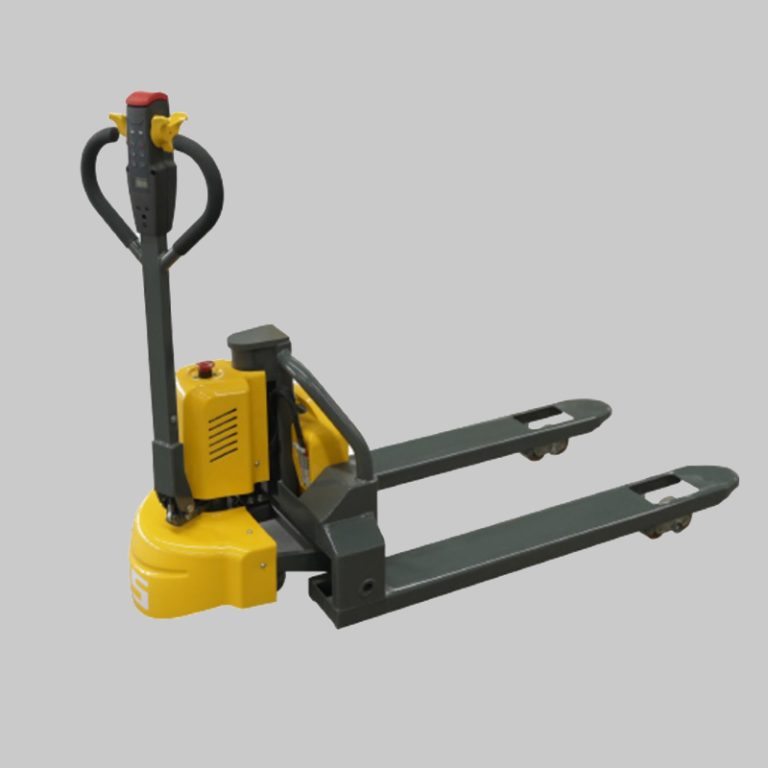
- PT16H / PT20H electric pallet trucks
- Manual hydraulic pallet trucks
Choose transport, stacking or reach equipment
A pallet truck is commonly discussed for horizontal movement. A stacker adds a lifting requirement, while racking access may call for a different warehouse truck format. State the task in plain language before selecting a category name. If several tasks occur in the same building, list them separately and show which loads and heights belong to each.
The JinChengYu source material includes PS15E pallet stacker and PT16H or PT20H electric pallet truck references, along with manual hydraulic pallet trucks. Those names are starting points for a quotation. They do not establish current availability or prove that one machine covers every route described on the page.
- Pallet size and entry direction
- Rack height and aisle width
- Floor condition and ramps
- Operating hours and charging access
Measure aisles, doors and racking
Provide pallet dimensions, rack face clearance, the highest storage position and the lowest overhead restriction. Include aisle width at the tightest point and space available for a turn. If the floor plan uses different aisle sizes, send the route that the equipment will actually follow instead of the largest measurement.
Attachments, non-standard pallets and long loads can change the working envelope. Identify them before a model is proposed. Ask for confirmed truck dimensions, turning information, mast details and rated capacity at the required configuration. A general catalogue photograph cannot answer those site-specific questions.
Plan the duty cycle and charging access
State daily operating hours, peak periods, travel distance and available breaks. For electric equipment, describe the charging supply and location. Keep battery and charging statements tied to the exact quoted model; the verified source does not support transferring voltage, battery size or charge-time figures from one warehouse product to another.
The documented model references include PS15E at 1,500 kg and PT16H or PT20H at 1,600 kg and 2,000 kg respectively. These figures remain model-specific and still require a current quotation. They do not show suitability for a given ramp, aisle, floor or lift height without the rest of the application data.
- Pallet size and entry direction
- Rack height and aisle width
- Floor condition and ramps
- Operating hours and charging access
Prepare the quotation request
Send the pallet size, load, route, rack height, aisle, doorway, floor, ramps, operating schedule, charging information, quantity and destination. A marked-up floor plan and photos can reduce follow-up questions. List requested documents and any packing or delivery constraints that must be addressed in the offer.
The quotation should identify the proposed model, configuration and included items. Confirm capacity, dimensions, mast or lift information, battery and charger where applicable, documentation, availability, shipping scope and commercial terms. JinChengYu does not publish a universal warranty, delivery time or local service promise across this category.
Questions before you enquire
When is a pallet truck different from a pallet stacker?
A pallet truck enquiry usually begins with horizontal transport, while a stacker enquiry includes placement at height. Describe the whole route and final position so the category can be checked.
Which warehouse dimensions should I send?
Include pallet size and entry, maximum load, rack height, narrowest aisle, tightest turn, lowest doorway, floor conditions and ramps.
How are model capacities used in a quotation?
Keep figures tied to the exact model and configuration. PS15E, PT16H and PT20H have documented model-specific figures, but suitability still depends on the task and site.
General safety references
These independent sources support the application and workplace questions on this page. They do not certify a product or replace the exact model manual, local rules or a site-specific assessment.