Telescopic Handlers
A telescopic handler enquiry needs a load position, not just a load weight. Tell JinChengYu how high and how far forward the load must be placed, then add the attachment, ground, access and destination.
Discuss this equipment ↗When a telescopic handler fits the task
Telehandlers combine lifting height with forward reach. That can suit work where a load must be placed beyond an obstacle or into a position a conventional forklift cannot approach in the same way. Describe the complete movement from pickup to placement, including travel with the load, turning space and people or structures near the route.
A rough terrain forklift is a separate category. If the job mainly involves carrying and stacking on an outdoor surface, compare that route as well. If forward reach is essential, record the horizontal distance at the actual placement height. A clear job description lets the two equipment categories be compared on the work rather than on similar-looking tyres.
Catalogue options to discuss
- T1440 / T1035 catalogue models
- T1850 / T3507 catalogue models
- Model-specific load chart and attachment review
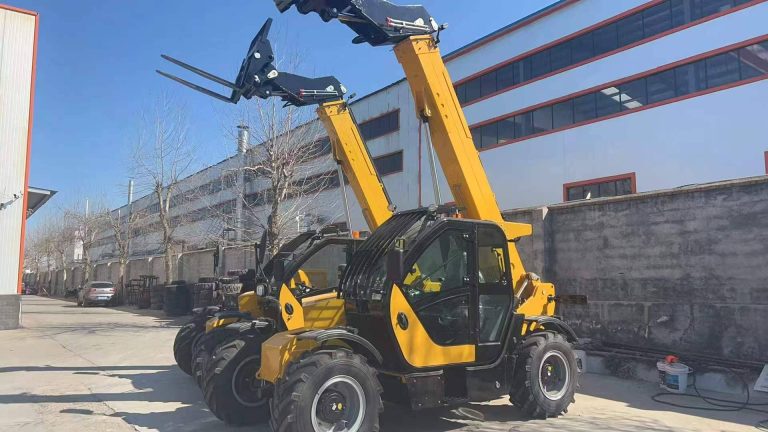
Start with the load position
Provide the load weight, dimensions and centre of gravity if known. Then state the vertical height and horizontal reach needed at the final position. Maximum capacity, maximum lift height and maximum forward reach are separate figures; they should never be combined into one assumed operating point.
Request the load chart for the exact proposed model and attachment. The HSE telehandler guidance linked below explains that capacity varies with boom extension and height and that ground and operating conditions affect risk. Use that source as general safety reading while the proposed machine chart remains the controlling model-specific reference.
- Load weight and dimensions
- Required height and forward reach
- Attachment and working surface
- Access limits and destination
Compare the documented catalogue models
The verified JinChengYu catalogue references T1440, T1035, T1850 and T3507. These model names may be used to organize an enquiry, but their labels are not a substitute for a current specification. This page does not infer reach, height or capacity values from the digits in a model name.
Ask the quotation to identify the exact model, configuration and load chart. Compare the required working point against that chart, then review dimensions, steering or stabilizer arrangement and transport information from the approved document. Availability and commercial terms must also be confirmed for the current enquiry.
Check attachments, surface and access
Name the attachment and its task, whether the load is on forks or requires another handling tool. Attachment weight and load position can alter the usable capacity, so compatibility must be checked for the proposed combination. Do not assume that an attachment fits simply because it can be physically connected.
Describe slopes, loose ground, prepared surfaces, doorways and turning areas. Include overhead restrictions and power lines in the site assessment performed by the buyer. Photos and a plan help explain the route, but trained operation, local safety controls and compliance remain the responsibility of the equipment user and site manager.
- Load weight and dimensions
- Required height and forward reach
- Attachment and working surface
- Access limits and destination
Request the load chart and quotation
Bring the inputs into one request: load, dimensions, placement height, forward reach, pickup point, attachment, surface, access limits, quantity and destination. Mark uncertain figures for follow-up rather than rounding them into a convenient model description. State the documents you need before making a purchase decision.
JinChengYu can then discuss a documented catalogue model and proposed configuration. The written offer should confirm the model, attachment, chart, dimensions, documentation, packing, shipping scope, current availability and commercial terms. No page-level copy should be treated as permission to operate outside the manufacturer’s instructions or local rules.
Questions before you enquire
Is a telehandler the same as a rough terrain forklift?
No. They are separate categories. Record whether the task needs forward reach as well as lift height, then compare the proposed equipment against the actual load route.
Does maximum capacity apply at maximum reach?
Do not assume that it does. Capacity changes with boom position and attachment. Review the required working point on the exact model load chart.
What information is needed before requesting a load chart?
Provide load weight and dimensions, lift height, forward reach, pickup and placement points, attachment, surface, access limits and destination.
General safety references
These independent sources support the application and workplace questions on this page. They do not certify a product or replace the exact model manual, local rules or a site-specific assessment.